Versatile. Consistent.
Virgin hair is generally used to describe human hair that has been selected to offer a consistent look and versatile styling. It can be a more accessible option when compared with hair sold as raw.
Understanding the hair, construction and length behind a unit makes choosing your crown much easier. This guide breaks down the details without making the process complicated.
Hair terms can sound similar, but they can describe very different products. Understanding the basics makes it easier to compare options and ask the right questions before choosing.
Virgin hair is generally used to describe human hair that has been selected to offer a consistent look and versatile styling. It can be a more accessible option when compared with hair sold as raw.
Raw hair is generally positioned closer to its natural state, so natural differences in texture, appearance and behaviour can be more noticeable. It is typically positioned at a higher price point.
Terms such as virgin and raw can be used differently by different suppliers. Exact processing, origin and specifications should always be confirmed for the hair you are enquiring about.
Each collection has its own finish, movement and character. Select a collection to see how the hair is positioned within the KVNGS range.
Selected for a smooth, straight finish with a clean and polished appearance.
Construction changes how a unit is built around the front and parting area, while length changes where the hair is likely to fall. Use the guides below as a starting point.
Select a construction to see the approximate area it refers to and what that construction means when discussing a unit with KVNGS.
A smaller closure area designed around a more focused parting section at the front of the unit.
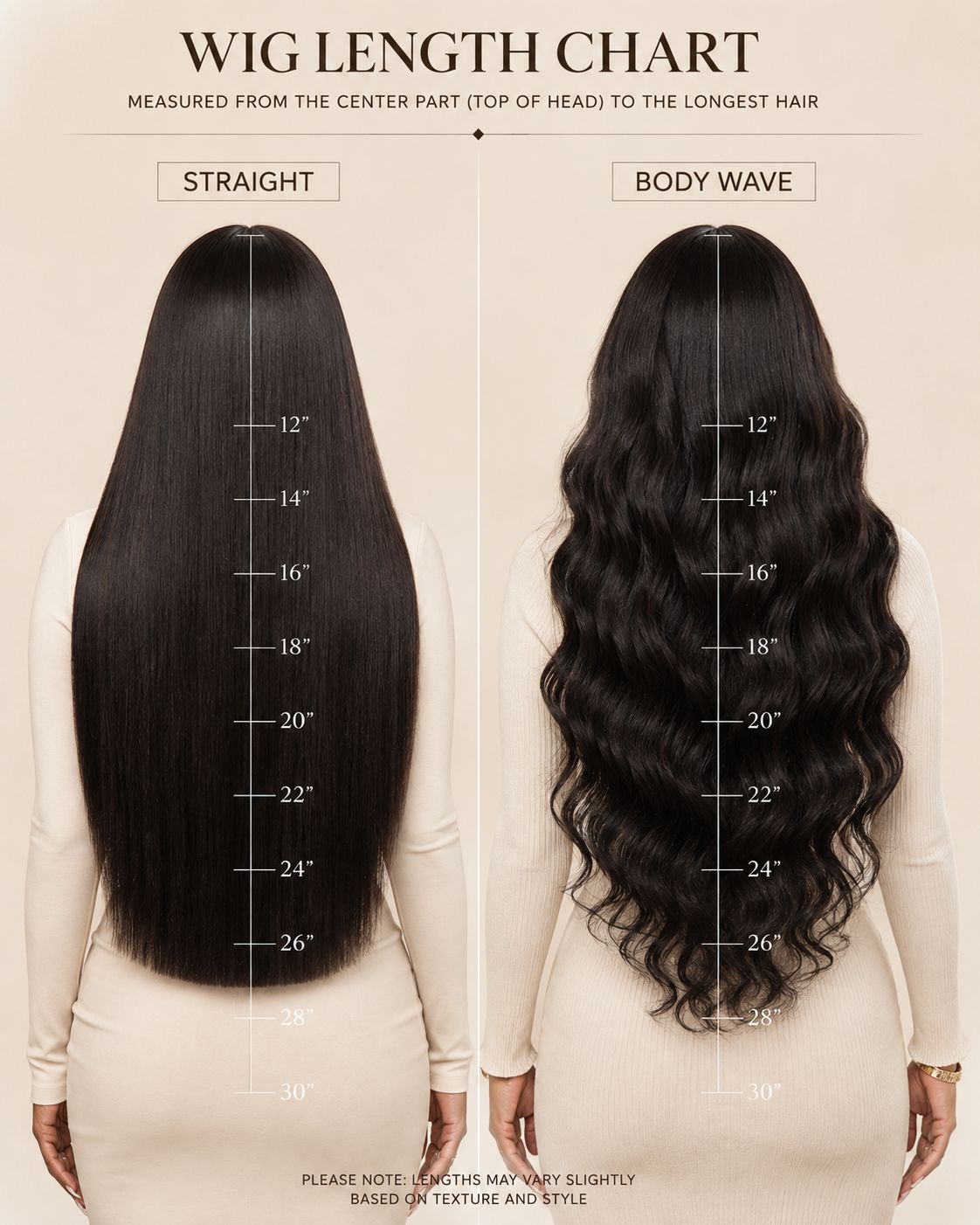
The same measured length can appear different depending on your height, the hair texture and how the hair naturally falls.
On this guide, 18-inch straight hair falls around the upper-chest area. Actual placement will differ from person to person.
Curly hair can look shorter than straight hair at the same measured length because part of the length is held within the curl pattern.
Use the interactive guide above to explore how your chosen length falls. For a quick visual comparison, use the length chart below.
You do not need to know every technical detail before choosing. KVNGS can help you discuss the hair, length and construction that matches the look you have in mind.
Good care helps protect the appearance, softness and movement of your crown. Keep the routine gentle and adjust it according to the hair you are wearing.
Work gently through the hair and avoid pulling aggressively through knots. Starting near the ends and working upward can help reduce unnecessary tension.
Keep washing gentle and avoid rough rubbing, twisting or unnecessary handling. The routine should suit the hair type and how often the crown is being worn.
Conditioning can help maintain softness and manageability. Avoid overloading the hair with unnecessary product and use what suits the particular crown.
Avoid rough towel movement, pulling or unnecessary friction while the hair is wet. Give the hair time and handle it carefully as it dries.
Use heat carefully and only when appropriate for the hair. Excessive heat or repeated high-heat styling can place unnecessary stress on the crown.
Keep your crown protected when it is not being worn. Avoid leaving it crushed or tangled and take extra care to preserve the shape and curl pattern where relevant.
Curly hair benefits from gentle handling that respects the curl pattern. Avoid repeatedly pulling or brushing through the hair in a way that unnecessarily disturbs its natural shape.
You do not need to know every hair term, construction or care detail before enquiring. Tell KVNGS the look you have in mind and start the conversation from there.